
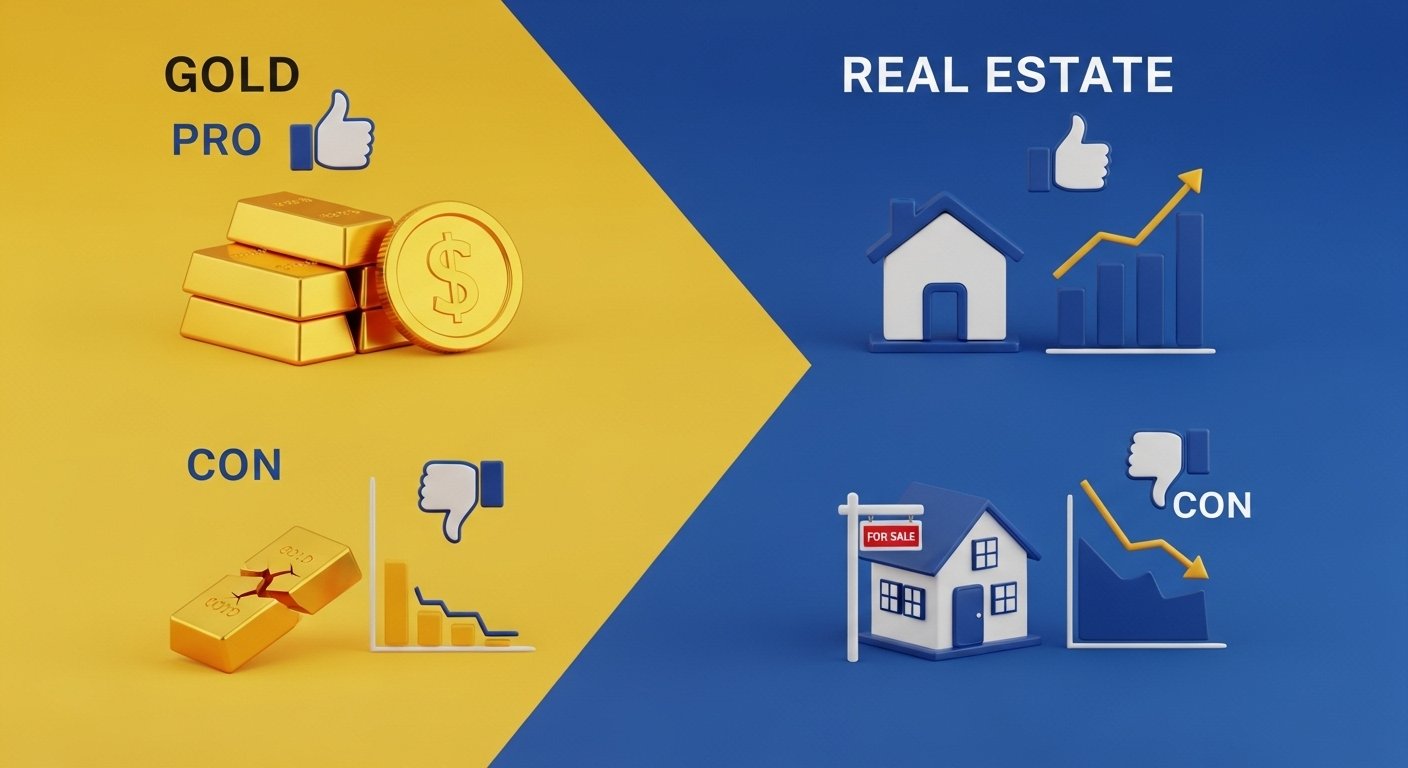
Pros and Cons of Investing in Gold and Real Estate

Investing is an essential aspect of building wealth and securing financial stability for the future. While there are various investment options available, two popular choices that have stood the test of time are gold and real estate. Both gold and real estate offer unique advantages and disadvantages, making them attractive options for investors with different goals and risk tolerances. In this article, we will delve into the pros and cons of investing in gold and real estate, helping you make an informed decision based on your individual circumstances.

investing in gold

Pros of Investing in Gold

Hedge Against Inflation

Gold has long been regarded as a hedge against inflation. When the value of fiat currencies declines, gold tends to retain its purchasing power. This makes gold an attractive investment during periods of economic uncertainty and high inflation, as it can help protect the value of your wealth.

Portfolio Diversification

Diversification is a fundamental principle of investing. By including gold in your investment portfolio, you can reduce the overall risk and volatility. Gold often behaves differently from other asset classes like stocks and bonds, making it an effective diversification tool.

Safe Haven Asset

Gold is often considered a safe haven asset. During times of geopolitical tensions or economic downturns, investors flock to gold as a store of value. Its historical track record as a safe investment option provides a sense of security and stability during uncertain times.

Potential for High Returns

While gold is primarily seen as a store of value, it can also offer significant returns over the long term. The price of gold is influenced by supply and demand dynamics, investor sentiment, and macroeconomic factors. By carefully analyzing these factors, investors can identify opportunities for capital appreciation.

Liquidity

Gold is a highly liquid asset, meaning it can be easily bought or sold in various forms, such as bullion bars or coins. The global market for gold is deep and accessible, ensuring that investors can convert their gold holdings into cash quickly when needed.

Cons of Investing in Gold

Lack of Income Generation

Unlike some other investment options, such as stocks or real estate, gold does not generate any income. It does not pay dividends or interest. Therefore, gold is primarily a capital appreciation investment, and investors rely on price appreciation to generate profits.

Volatility and Price Fluctuations

The price of gold can be volatile, experiencing significant price fluctuations over short periods. Investors in gold must be prepared to withstand market volatility and potential downturns, as the value of gold can decline along with other economic factors.

Storage and Insurance Costs

Physical gold requires secure storage, which can incur additional costs. Investors need to consider storage fees and insurance premiums to protect their gold holdings adequately. These costs can eat into potential returns, especially for smaller investment amounts.

Limited Industrial Use

While gold is valued for its aesthetic appeal and historical significance, its industrial use is relatively limited compared to other metals. The demand for gold mainly comes from jewelry, investments, and central bank reserves. Changes in industrial demand may not significantly impact the overall value of gold.

Potential for Counterfeit or Fraudulent Schemes

Investors in gold need to be cautious about counterfeit products and fraudulent schemes. The market for gold attracts some unscrupulous individuals, making it essential to purchase gold from reputable sources and verify authenticity.

Pros of Investing in Real Estate

Appreciation and Potential for Long-Term Growth

Real estate has historically appreciated in value over the long term. Investing in well-located properties in growing markets can provide substantial capital gains. Real estate investments offer the potential for wealth accumulation and long-term growth.

Rental Income and Cash Flow

Investing in rental properties allows investors to generate regular income through rental payments. Rental income can provide a stable cash flow stream, which can be especially beneficial during retirement or as a passive income source.

Tax Benefits and Deductions

Real estate investments offer various tax benefits and deductions. Expenses such as mortgage interest, property taxes, and depreciation can be deducted from rental income, reducing the tax liability. Additionally, real estate investors may benefit from favorable tax treatment on long-term capital gains.

Tangible Asset with Utility Value

Real estate is a tangible asset that provides utility value in the form of shelter, commercial space, or other purposes. Unlike some investments that exist primarily on paper, real estate offers physical presence and usefulness, making it an essential part of society and the economy.

Potential for Leverage

Real estate investments often allow investors to leverage their capital by obtaining a mortgage. By using borrowed funds, investors can control a more substantial asset value than their initial investment. Leverage can amplify returns if property values appreciate.

Cons of Investing in Real Estate

Illiquid Asset

Real estate is considered an illiquid asset, meaning it cannot be easily converted into cash. Selling a property may take time, especially in a slow real estate market. Investors need to be prepared for a more extended time horizon when investing in real estate.

Market Fluctuations and Economic Factors

Real estate values are subject to market fluctuations and economic conditions. Local market factors, interest rates, and economic indicators can impact property values. Investors should be aware of these factors and conduct thorough research before making real estate investment decisions.

High Initial Costs and Ongoing Expenses

Investing in real estate requires substantial upfront costs, such as down payments, closing costs, and property acquisition expenses. Additionally, ongoing expenses like property taxes, maintenance, and insurance can add up over time, affecting the overall return on investment.

Time and Effort Required for Management

Real estate investments often require active management, especially for rental properties. Landlords need to handle tenant screening, lease agreements, property maintenance, and other responsibilities. Investors should be prepared to invest time and effort into managing their real estate assets.

Legal and Regulatory Challenges

Real estate investments are subject to various legal and regulatory requirements. Landlord-tenant laws, zoning regulations, building codes, and other legal considerations can be complex and vary by jurisdiction. Investors need to be well-informed and comply with applicable laws to avoid legal issues.

Conclusion

Both gold and real estate offer unique advantages and disadvantages for investors. Gold provides a hedge against inflation, diversification, and potential for high returns but lacks income generation and can be volatile. Real estate offers appreciation, rental income, tax benefits, and leverage opportunities but requires upfront costs, active management, and is subject to market fluctuations. Ultimately, the choice between gold and real estate depends on an investor’s goals, risk tolerance, and individual circumstances.

FAQs

1.Is gold a good investment for retirement?

Yes, gold can be a good investment for retirement as it can provide a hedge against inflation and a store of value. However, it’s important to diversify your retirement portfolio and consult with a financial advisor to ensure it aligns with your overall retirement strategy.

2.Can I invest in real estate with a limited budget?

Yes, investing in real estate with a limited budget is possible. Options include purchasing smaller properties, investing in real estate investment trusts (REITs), or exploring crowd funding platforms that allow fractional ownership of properties.

3.How can I mitigate risks associated with investing in gold?

To mitigate risks when investing in gold, consider purchasing from reputable sources, verifying the authenticity of gold products, and storing them securely. Diversifying your investment portfolio and staying informed about market trends can also help manage risks.

4.What are some common pitfalls to avoid when investing in real estate?

Common pitfalls to avoid when investing in real estate include overpaying for properties, neglecting thorough due diligence, underestimating expenses, and failing to account for potential vacancy periods. Conducting proper research and seeking professional advice can help navigate these pitfalls.


Share:

More Posts

Enhancing Health and Well-being: Vastu Remedies for Real Estate Properties

Introduction:In the pursuit of a balanced and harmonious lifestyle, the ancient Indian science of Vastu Shastra offers valuable insights. Beyond mere architectural principles, Vastu emphasizes the connection between the built environment and human well-being. In this blog, we explore how Vastu remedies can be applied to real estate properties to promote health and overall wellness. Understanding Vastu Shastra: Brief overview of Vastu Shastra and its significance in real estate.Basic principles of Vastu relevant to health and well-being. Importance of Health-Conscious Real Estate: Impact of the built environment on physical and mental health.Rising demand for Vastu-compliant properties among health-conscious individuals. Identifying Health-related Vastu Issues: Common Vastu defects that may affect health and well-being in properties.Signs indicating Vastu disharmony in real estate spaces. Vastu Remedies for Health and Wellness: Positioning of key rooms (bedrooms, kitchen, and bathrooms) for optimal health.Selection of colors, materials, and décor to enhance well-being.Importance of natural light and ventilation in promoting good health. Balancing Energy Flow: Creating a balanced energy flow (Prana) through Vastu-based design principles.Placement of plants, water features, and mirrors to improve energy circulation. Vastu Tips for Bedrooms: Ideal bedroom layout and orientation for restful sleep and rejuvenation.Avoiding Vastu pitfalls in bedroom design to prevent health issues. Kitchen Vastu for Health: Vastu-compliant kitchen design to promote physical health and nutritional well-being.Placement of cooking appliances and storage areas for a harmonious kitchen environment. Healing Spaces: Vastu for Home Offices and Meditation Rooms: Vastu guidelines for creating conducive environments for work and meditation.Incorporating natural elements and Vastu symbols for stress reduction and mental clarity. Addressing Structural Vastu Defects: Remedies for correcting structural Vastu defects that impact health.Consultation with Vastu experts for personalized solutions. Harmonizing Indoor and Outdoor Spaces: Integration of Vastu principles in landscaping and outdoor design for overall well-being.Balancing indoor-outdoor connections to promote a sense of harmony and vitality. Conclusion:By embracing the principles of Vastu Shastra, real estate properties can become sanctuaries that nurture health, happiness, and holistic well-being. Whether designing a new space or revitalizing an existing one, incorporating Vastu remedies can create environments that support the physical, mental, and spiritual health of occupants. Let’s embark on this journey to create spaces that not only shelter us but also nourish our bodies, minds, and souls.

Creating Vacation Retreats: Vastu Shastra Tips for Buying Vacation Homes

Introduction:Dreaming of owning a vacation home where you can escape the hustle and bustle of daily life and rejuvenate your senses? Incorporating Vastu Shastra principles into your vacation home buying process can enhance the tranquility and relaxation of your retreat. In this blog, we delve into how Vastu Shastra can guide you in selecting and designing a vacation home that becomes your serene sanctuary. Understanding the Essence of Vastu Shastra: Overview of Vastu Shastra and its relevance in real estate.Introduction to Vastu principles that contribute to harmony and well-being. Importance of Vastu in Vacation Home Selection: Exploring the significance of Vastu compliance in vacation home buying decisions.Benefits of aligning the vacation home’s energy with natural surroundings. Location Selection and Orientation: Choosing a Vastu-compliant location for your vacation home amidst scenic beauty.Optimal orientation of the property to harness positive energies and maximize relaxation. Designing Relaxing Interiors: Incorporating Vastu-friendly interior design elements for a calming ambiance.Selecting soothing colors, textures, and furnishings to promote relaxation. Harmonizing Living Spaces: Vastu tips for layout and placement of living areas to encourage harmony and tranquility.Creating seamless indoor-outdoor connections for a closer bond with nature. Vastu Remedies for Ensuring Peaceful Sleep: Designing bedrooms in alignment with Vastu principles for restful sleep and rejuvenation.Placement of beds, furniture, and décor to promote relaxation and well-being. Kitchen and Dining Area Alignment: Applying Vastu guidelines to the kitchen and dining spaces for nourishment and harmony.Ensuring proper placement of cooking appliances and dining furniture for positive energy flow. Outdoor Retreat Spaces: Designing outdoor areas such as gardens, patios, and decks in accordance with Vastu principles.Creating tranquil outdoor retreats for relaxation, meditation, and connecting with nature. Incorporating Vastu Symbols and Elements: Introducing Vastu symbols, such as yantras and sculptures, to enhance positive energy flow.Utilizing natural elements like water features and greenery to promote serenity. Consultation with Vastu Experts: Importance of consulting Vastu experts during the vacation home buying process.Customizing Vastu recommendations to suit individual preferences and requirements. Conclusion:By integrating Vastu Shastra principles into the process of buying and designing vacation homes, you can create tranquil retreats that nurture your mind, body, and soul. Whether nestled in the mountains, by the sea, or amidst lush landscapes, your Vastu-compliant vacation home will serve as a sanctuary where you can unwind, recharge, and reconnect with yourself and nature. Embrace the wisdom of Vastu Shastra and embark on a journey to create your perfect oasis of relaxation and rejuvenation.

Energize Your Space: Vastu Tips for Enhancing Energy Flow Interiors

Introduction:Creating a harmonious and vibrant living or working environment goes beyond mere aesthetics; it involves optimizing the flow of energy within the space. Vastu Shastra, an ancient Indian science, offers valuable guidelines for enhancing energy flow in real estate interiors. In this blog, we’ll explore practical Vastu tips that can help you create spaces that resonate with positive energy and vitality. Understanding the Importance of Energy Flow: Introduction to Vastu’s perspective on energy flow within built environments.Significance of balanced energy (Prana) for promoting well-being and success. Clearing Clutter and Opening Pathways: Decluttering spaces to remove obstacles and allow energy to flow freely.Ensuring clear pathways and unobstructed movement within rooms. Optimal Furniture Placement: Positioning furniture in alignment with Vastu principles to facilitate energy flow.Avoiding blocking energy pathways with bulky furniture pieces. Balancing Elements: Incorporating a balance of the five elements (earth, water, fire, air, and space) in interior design.Using materials and décor items that represent each element to create harmony. Enhancing Natural Light and Ventilation: Maximizing natural light and ventilation to invigorate spaces with positive energy.Choosing window treatments that allow ample sunlight and fresh air to enter. Color Psychology in Vastu: Selecting colors based on Vastu principles to evoke specific energies and emotions.Harnessing the psychological effects of colors to create a balanced and uplifting atmosphere. Harmonizing Bedroom Energy: Applying Vastu guidelines to bedroom design for promoting restful sleep and rejuvenation.Placing the bed and other furniture in alignment with positive energy flow. Optimizing Kitchen and Bathroom Layouts: Vastu-compliant design tips for kitchens and bathrooms to enhance energy flow.Positioning cooking appliances and bathroom fixtures to prevent energy stagnation. Sacred Spaces and Altars: Creating sacred spaces or altars within the home to amplify positive vibrations.Utilizing Vastu symbols, yantras, or religious artifacts to energize these spaces. Regular Energy Cleansing Practices: Implementing regular energy cleansing rituals, such as smudging or sound cleansing.Maintaining a harmonious energy balance through meditation, prayer, or mindfulness practices. Conclusion:By incorporating these Vastu tips into your real estate interiors, you can optimize energy flow and create spaces that uplift and inspire. Whether it’s your home, office, or any other real estate property, aligning with the principles of Vastu Shastra can enhance the vitality and positivity of the environment. Embrace these guidelines and embark on a journey to energize your space for greater well-being and success.

Aligning Success: Vastu Shastra for Real Estate Agents

Introduction:In the competitive world of real estate, success often hinges not just on market knowledge and negotiation skills but also on the energy of the spaces where transactions take place. Vastu Shastra, an ancient Indian science, offers powerful insights into harmonizing environments to attract prosperity and success. In this detailed blog, we’ll explore how real estate agents can leverage Vastu principles to enhance their professional success and create positive energy in their workspaces. Understanding Vastu Shastra for Real Estate: Brief overview of Vastu Shastra and its relevance in real estate.Introduction to key Vastu principles applicable to real estate agents’ workspaces. Setting the Stage: Vastu-Compliant Office Spaces: Importance of choosing a Vastu-compliant office location for real estate agencies.Optimal office layout and orientation based on Vastu principles for positive energy flow. Enhancing Productivity with Vastu: Vastu-friendly workspace design to promote productivity and efficiency.Placement of desks, chairs, and other office furniture to align with positive energy channels. Attracting Prosperity: Vastu Tips for Reception Areas: Designing welcoming and energetically vibrant reception areas using Vastu principles.Incorporating auspicious symbols and elements to attract success and prosperity. Commanding Presence: Vastu for Conference and Meeting Rooms: Vastu guidelines for conference and meeting room layouts to empower negotiations and deal-making.Ensuring optimal seating arrangements and directional orientation for positive outcomes. Personal Success Zones: Vastu for Individual Workstations: Creating conducive workstations for real estate agents based on Vastu recommendations.Positioning desks, chairs, and electronic devices to enhance focus and productivity. Inviting Abundance: Vastu Remedies for Sales Offices: Implementing Vastu remedies to overcome obstacles and enhance sales performance.Activation of prosperity zones within sales offices to attract lucrative deals and opportunities. Harnessing Positive Energy: Vastu Symbols and Décor: Incorporating Vastu symbols and elements, such as yantras and crystals, to amplify positive energy.Utilizing artwork, plants, and color schemes in accordance with Vastu principles for vibrancy. Real Estate Marketing Materials: Vastu-Conscious Branding: Applying Vastu principles to real estate branding, marketing materials, and signage.Choosing fonts, colors, and imagery that align with positive energy vibrations. Personal Well-being: Vastu for Agents’ Personal Spaces: Extending Vastu principles to real estate agents’ personal living spaces for overall well-being.Creating harmonious environments at home to support work-life balance and mental clarity. Conclusion:By integrating Vastu Shastra principles into their workspaces and personal lives, real estate agents can align themselves with positive energy and enhance their professional success. Whether it’s optimizing office layouts, incorporating Vastu symbols, or fostering a balanced work-life environment, embracing Vastu can empower agents to thrive in the competitive real estate industry. Embrace these Vastu tips and embark on a journey to elevate your success as a real estate professional.